It is World Glaucoma Week! This is a week where we focus on raising awareness about glaucoma. Let’s inform you what glaucoma is all about.
What is glaucoma?
Glaucoma is an eye disease in which the optic nerve is progressively damaged. The optic nerve is the structure which sends signals from your eyes to the brain. Damage to this optic nerve can cause peripheral vision loss which affects important lifestyle tasks such as mobility and driving.
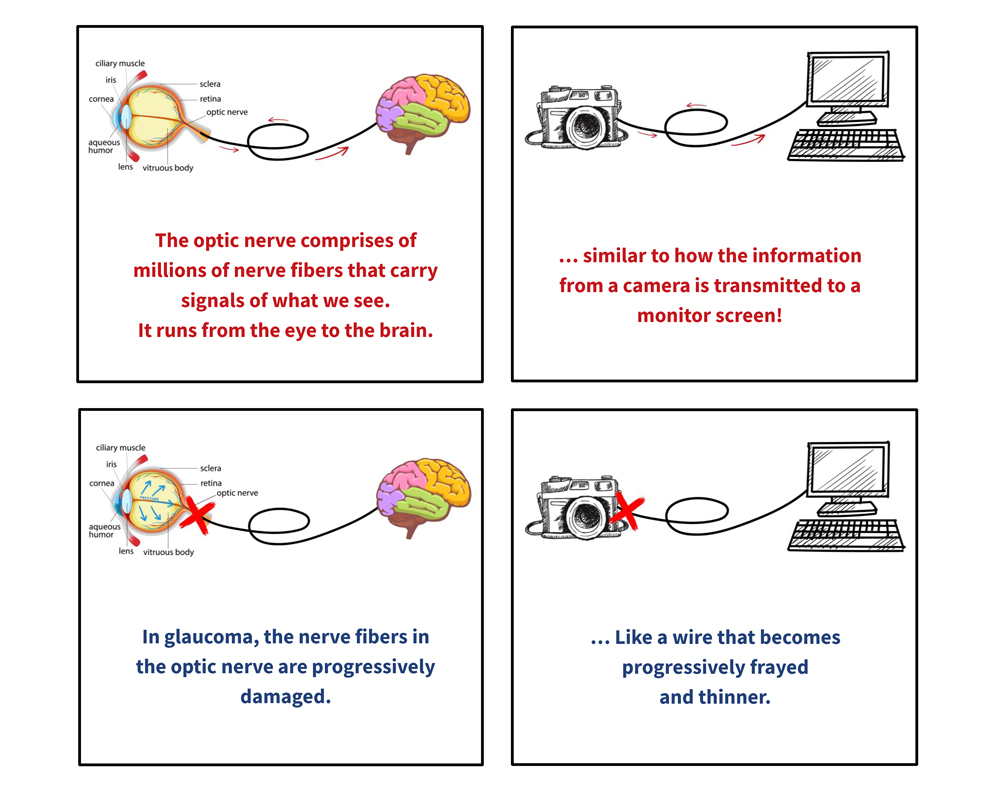
Source: World Glaucoma Association
What are the signs and symptoms?
Glaucoma affects around 300,000 people in Australia, but half of these affected people aren’t aware that they have it1. This is because glaucoma often does not cause any obvious symptoms until it is too late, at which point, all vision loss associated with glaucoma is irreversible.
There are different types of glaucoma. Usually, those that are diagnosed with glaucoma have high eye pressures in one or both eyes however, it is important to know that eye pressures in the normal expected range can still cause glaucoma. Some rarer forms of glaucoma can cause symptoms such as severe eye pain, headaches and nausea.
Who is at risk of glaucoma?
Some factors which increase your risk for developing glaucoma include:
- Family history of glaucoma
- Over 60 years of age
- Previous eye injuries (trauma)
- Current or past steroid use
- High eye pressure
Can glaucoma be cured?
The damage caused by glaucoma cannot be reversed, so the goal of treating glaucoma is to preserve the current vision and minimise any further damage. This is most commonly done with eye drops to lower the eye pressures. In certain situations or advanced cases, there are laser and surgical treatment options too.
Due to the irreversible and silent nature of glaucoma, early detection through regular routine eye examination is crucial in the management of glaucoma. A general eye test once every 2 years is recommended unless otherwise specified by your optical professional.
If you are concerned about your risk of glaucoma or have not had your eyes tested in a while, feel free to contact us and we will make our way to you for an assessment!
Source: