Did you know it’s Macula Month in Australia this May? You may have heard of the words “macular degeneration” before, but what does it mean?
What is macular degeneration?
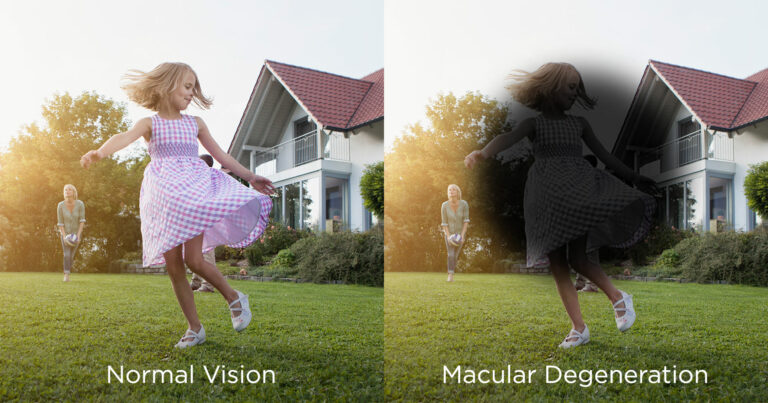
Age-related macular degeneration (AMD) is an eye disease which affects the macula, which is the structure at the back of the eye responsible for your central line of vision. Macular degeneration causes central vision loss, but does not impact peripheral vision. It affects around 1 in 7 Australians over the age of 501.
What are the signs and symptoms to look out for?
- Blurry or distorted central vision, even with glasses
- Difficulty with finer details such as reading even with glasses
- Difficulty distinguishing faces
- Dark/blind spots in your central vision
- Needing more light to do daily tasks
- Reduced night vision
What are the different stages of macular degeneration?
There are typically 3 stages in advancing severity: early, intermediate and advanced.
Early AMD typically only requires eye tests around every 12 months (but this will depend on your individual risk factors) to monitor for any changes. You may notice some blurry vision at this stage.
Intermediate AMD will require more regular reviews, ranging from 3-6 months (once again depending on your individual risk factors), as this is the stage before advanced macular degeneration. You may also notice some blurry vision at this stage.
Advanced AMD is the most serious stage out of the three and involves a serious risk of permanent vision loss. Symptoms may include, but are not limited to, distorted vision, blurry vision even with glasses, or a blind spot in your central vision. This will require further management by an ophthalmologist, which we can help organise a referral for if needed.
Source: Malik Eye Care
Am I at risk?
There are several factors which increase your chances of developing macular degeneration with the three main ones being:
- Age over 50
- Family history of macular degeneration
- Smoking
While these risk factors increase the chances of you developing macular degeneration, you can still get macular degeneration even if you do not fit into any of these risk groups. This eye condition can affect anyone.
What can I do?
As mentioned before, smoking is a big risk factor for developing and worsening macular degeneration. You are 3-4 times more likely to develop macular degeneration if you smoke. The easy advice if you smoke is to stop smoking, but understandably quitting smoking is not easy. If you are struggling with this, you should seek help from your doctor or pharmacist.
There are also dietary changes which can reduce the risk of developing or worsening macular degeneration. Nutrients that are good for macular health include:
- Lutein
- Zeaxanthin
- Omega 3
- Vitamin C
- Vitamin E
- Copper
- Zinc
Foods that can be included in your diet include green leafy vegetables, fish, nuts, eggs and citrus fruit just to name a few. Supplements may help if you already have macular degeneration but it is always best to consult with us (your optometrist) or your doctor for further advice before starting on these supplements.
If you are concerned that you may have macular degeneration, or have any questions, feel free to contact us so that we can make our way to you for an assessment!
Source:
1: https://www.mdfoundation.com.au/about-macular-disease/age-related-macular-degeneration/amd-overview/